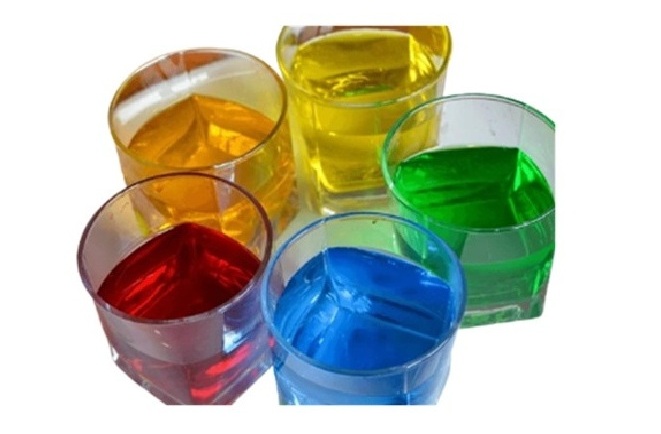
Since ancient times, people have used colors in food, drugs, and cosmetic products. Numerous behavioral studies have shown that human appetite and food choices are strongly influenced by color.
For this reason, food colors are widely used across the world to enhance the visual appeal of foods.
Compared to natural colors, synthetic food colors are more commonly used because they offer a wider range of shades and are more cost-effective.
Synthetic Food Colors Supra – Pure
| Common Name | Shade | Food Colour No. | C.I. No | E.C. No |
|---|
| Allura Red | | Red 17 | 16035 | E 129 |
| Amaranth | | Red 9 | 16185 | E 123 |
| Black PN | | Black 1 | 28440 | E 151 |
| Brilliant Blue FCF | | Blue 2 | 42090 | E 133 |
| Carmoisine | | Red 3 | 14720 | E 122 |
| Chocolate Brown HT | | Brown 3 | 20285 | E 155 |
| Erythrosine | | Red 14 | 45430 | E 127 |
| Indigo Carmine | | Blue 1 | 73015 | E 132 |
| Ponceau 4R | | Red 7 | 16255 | E 124 |
| Patent Blue V | | Blue 5 | 42051 | E 131 |
| Quinoline Yellow | | Yellow 13 | 47005 | E 104 |
| Red 2G | | Red 10 | 18050 | E 128 |
| Sunset Yellow | | Yellow 3 | 15985 | E 110 |
| Tartrazine | | Yellow 4 | 19140 | E 102 |